Every morning used to start the same for me—creaky joints, tight shoulders, and that nagging stiffness from a night of uneven sleep. One weekend, I cleared a forgotten corner in my bedroom and tossed down an old towel. Within days, my routine shifted; fluid stretches became my gentle wake-up, easing tension and sparking steadier energy all day.
This simple setup melted away my excuses. No gym needed, just a dedicated spot that invited movement. You’ll feel reduced muscle knots, better posture, and that quiet confidence from consistent habits. It turns “I’ll stretch later” into “right now feels natural.”
Today, we’ll build yours with a 4-pillar framework: assess your nook, gather gear, add cues, and let it flow. We’ll compare quick options in a table, tackle blockers, and track one tiny metric. These steps keep it sustainable, stacking small wins for lasting ease. Ready to claim your space?
Spot Your Everyday Nook: Zero-Clutter Zones That Work
Start by scanning your home for spots that already fit your flow. Look for three ideal zones: a bedroom corner near your bed, the living room edge by a window, or even a hallway wall. These zero-clutter areas use existing light and quiet to cue your body naturally.
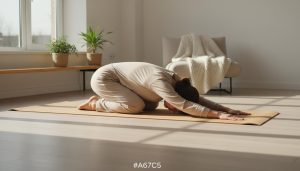
Habit cues shine here—like placing your nook by the bed so morning light nudges you to stretch first thing. Before, I’d shuffle past my closet, ignoring my body. After spotting that sunny bedroom corner, I now unroll my mat automatically, blending stretch into my wake-up routine.
Test each spot for a day. Walk through your daily path; does it feel inviting without rearranging furniture? This steady assessment builds a space that sticks.
Gather Go-To Gear: Affordable Picks for Any Tight Space
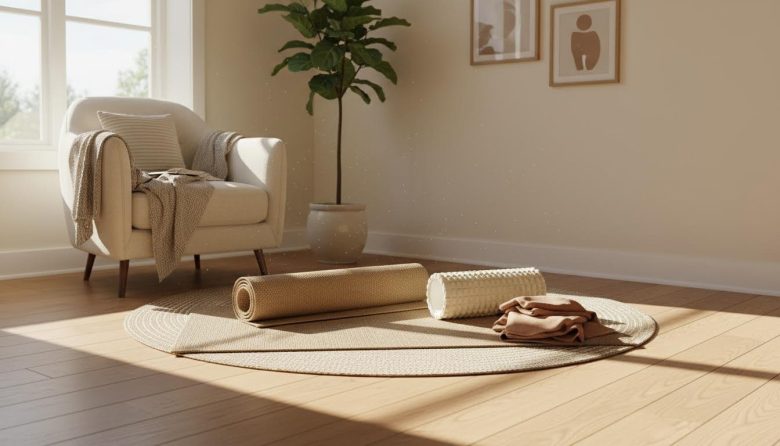
Keep it minimal with 4-5 essentials that fit anywhere. A thin yoga mat anchors your base—grab a budget one under $20. Add a strap for deeper reaches, a foam block for support, and resistance bands for variety.
Budget tiers make it accessible: starter at $30 total, or upgrade to cushioned mats for $50. Environment tweaks shine too—roll a thick towel as a sub for a block, or use a belt instead of a strap. I started with household finds, and it fueled my consistency.
Store them stacked in a basket nearby. This low-friction setup means less mental hurdle, more movement. Your body thanks the gentle support right away.
Layer in Gentle Cues: Signals That Spark Your Routine
Cues turn intention into action without force. Habit stack post-coffee: sip your brew, then unroll your mat for five breaths. Visual cues like a colorful mat edge or olfactory ones—a lavender diffuser nearby—signal “stretch time.”
My cue evolved from chaos. Coffee mug in hand led to doorway lunges, then a full nook routine. Now, that warm mug aroma pulls me in every morning, making consistency feel effortless.
Pair it with walks for synergy. As I noticed when adding stretches to my Weekly Walking Plan to Boost Daily Energy, energy flows smoother through the day. Start with one cue; watch your routine bloom.
Quick Stretching Space Options Compared
Choosing the right setup depends on your home and style. This table breaks down four realistic options, comparing space, items, time, and fit. Pick one that matches your flow for quick wins.
| Setup Type | Space Needed (sq ft) | Key Items | Setup Time (mins) | Best For |
|---|---|---|---|---|
| Minimalist Corner | 4 | Towel, strap | 2 | Tiny apartments, beginners |
| Yoga Nook | 9 | Mat, block, bands | 5 | Daily full routines |
| Wall Lean | 2 | Wall space, rolled towel | 1 | Quick tension relief |
| Bedside Flow | 6 | Mat edge, pillow prop | 3 | Morning wake-ups |
| Multi-Use Shelf | 5 | Basket storage, bands | 4 | Shared homes |
See how Wall Lean fits super-tight spots? Use this to match your life. Surrounding tweaks like these keep progress steady.
Build with 4 Simple Pillars: Your Launch Framework
Pillar 1: Assess. Walk your home today; note two spots with natural light and low traffic. Feel the potential—your body already knows where it wants to move.
Pillar 2: Equip. Gather three items from your budget tier; lay them out tonight. I equipped my corner in 10 minutes, and that tactile setup sparked my first stretch.
Pillar 3: Cue. Choose one signal, like post-brush teeth or phone alarm with soft chime. Stack it onto an existing habit for seamless entry.
Pillar 4: Flow. Start with 5 minutes: breathe, reach, release. Let it evolve naturally. Real-life example: My friend assessed her living room edge, equipped with a mat, cued it after tea, and now flows 15 minutes daily. Steady layers build sustainable movement.
Follow these pillars in order over a weekend. Small wins compound, turning your nook into a haven. Your fluidity awaits.
Overcome Common Blockers: Friction-Free Fixes
Clutter creep sneaks in fast. Fix: Add a 2-minute tidy cue before bed—sweep items into a bin. Keeps your space inviting.
Motivation dips on busy days. Pair a gentle reminder: Stretch links to breathing, not perfection. I breathe through dips, reclaiming ease.
Time squeeze hits everyone. Shrink to 3 poses; quality over length. These fixes lower friction, nurturing consistency.
Shared space doubts? Portable gear rolls away. Steady tweaks sustain your progress.
One Tiny Metric: Measure What Sticks
Track “stretches completed per week” in a phone note—jot a checkmark each session. No apps needed; this simple log highlights patterns.
Why it works: Small wins like three checks build momentum without overwhelm. I saw my weekly total climb from 2 to 5, fueling habit strength.
Choose one pillar, like your cue, and pair it with morning light. Try for 7 days; note your metrics. Sustainable tracking turns effort into flow.
Notice how this pairs with nutrition? When I wove stretches into routines alongside Daily Tips for Mindful Eating Without Diets, my body felt nourished head to toe. And for meal support, Simple 7-Day Meal Prep Plan for Beginners freed up stretch time. Your space sets the stage—step in today.
Frequently Asked Questions
Can I set up a stretching space in a shared living room?
Yes, portability is key. Opt for a foldable mat or Wall Lean setup that tucks away in seconds. Designate a basket for gear; involve housemates by sharing benefits like calmer vibes. This keeps harmony while claiming your flow.
What if I have no extra budget for gear?
Household subs work wonders. Use bath towels for mats, belts for straps, and sofa cushions as blocks. I started this way, and it bridged to affordable buys later. Focus on what you own; progress starts free.
How do I keep the space from getting cluttered?
Build a daily cue: End your stretch with a 60-second reset—roll mat, store items. Place a small sign or hook as reminder. Consistency here prevents creep, preserving your nook’s pull.
Is 10 minutes enough for stretching here?
Absolutely, it’s a sustainable start. Focus on breath and full ranges; depth trumps duration. Many build from 10 minutes to 20 naturally. Listen to your body for steady gains.
What if my body feels too stiff to start?
Gentle progression eases in. Begin with wall leans or seated twists—no force. Warm up with arm circles; consistency softens stiffness over days. My mornings transformed this way; yours will too.