I remember the days when my kids were toddlers, and fitting in any kind of movement felt impossible amid the chaos of spilled cereal and endless diaper changes. One afternoon, with toys everywhere and no gym in sight, I dropped to the floor for a quick set of knee push-ups right there in the living room. That small moment sparked something—a routine that built steady strength without needing equipment or hours I didn’t have.
No-equipment home exercises are a game-changer for busy lives like ours because they remove all the friction of packing bags or driving to a class. You can do them anywhere, anytime, turning spare minutes into small wins that add up to real confidence and energy. Over time, I’ve noticed my posture improves, I chase after the kids without huffing, and I sleep better—proof that consistency trumps intensity every time.
In this guide, we’ll use a simple 4-pillar framework to make these habits stick, plus a handy checklist of 15 exercises grouped for easy sessions. Whether you’re a beginner or just need reliable routines, these moves target your whole body with clear steps. Stick with me, and you’ll see sustainable progress that fits your real life.
Build a Sustainable Routine with Your 4-Pillar Framework
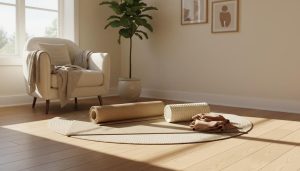
Pillar 1: Prep your space to cut friction. Clear a small mat-sized area—maybe move the coffee table aside—and keep it cue-ready, like slippers nearby signaling “time to move.” This tweak makes starting effortless, just like I do by rolling out my yoga mat each morning.
Pillar 2: Stack on a daily cue for automatic flow. Tie exercises to something you already do, such as after brushing your teeth or when coffee brews. I stack mine onto my morning routine, creating a seamless chain that builds without extra willpower.
Pillar 3: Pick 3-5 exercises per 10-15 minute session. Rotate groups like upper body one day, legs the next, to keep it fresh and balanced. This prevents overwhelm and lets you focus on form over volume.
Pillar 4: End with a quick win note. Jot one positive—like “Felt stronger in planks”—in your phone. It reinforces the habit and celebrates steady gains.
For example, my morning cue: After coffee (Pillar 2), I hit the prepped space (Pillar 1) for squats, planks, and glute bridges (Pillar 3), then note “Legs felt solid” (Pillar 4). Before, I’d skip days; now it’s routine.
Home Workout Habit Checklist
| Exercise | How-To Snapshot | Target Areas | Sets/Reps Guide |
|---|---|---|---|
| Knee Push-Ups | Place hands shoulder-width on floor, knees down, lower chest by bending elbows, push back up. | Chest, shoulders, triceps | 3 sets of 8-12 reps |
| Pike Push-Ups | Feet and hands on floor, hips high in inverted V, bend elbows to lower head toward ground. | Shoulders, upper chest | 3 sets of 6-10 reps |
| Superman Holds | Lie face down, arms extended forward, lift chest/arms/legs off floor, squeeze back. | Back, glutes, shoulders | 3 sets of 20-30 seconds |
| Diamond Knee Push-Ups | Hands under chest in diamond shape, knees down, lower body keeping elbows close. | Triceps, inner chest | 3 sets of 6-10 reps |
| Forearm Plank | Elbows under shoulders, forearms flat, body in straight line from head to heels. | Core, full body stability | 3 sets of 20-40 seconds |
| Bicycle Crunches | Lie back, hands behind head, alternate bringing elbow to opposite knee in pedaling motion. | Obliques, abs | 3 sets of 12 reps per side |
| Leg Raises | Lie on back, hands at sides, lift straight legs to 90 degrees, lower slowly without touching. | Lower abs | 3 sets of 10 reps |
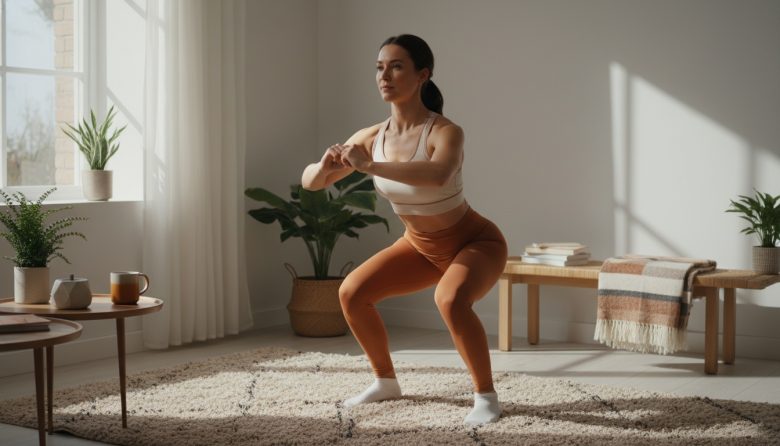
| Bodyweight Squats | Feet shoulder-width, toes slightly out, lower hips as if sitting back into chair, stand up. | Quads, glutes, hamstrings | 3 sets of 12-15 reps |
| Alternating Lunges | Step forward one foot, lower until both knees near 90 degrees, push back to start, alternate. | Legs, glutes | 3 sets of 10 reps per leg |
| Glute Bridges | Lie on back, knees bent feet flat, lift hips by squeezing glutes, lower slowly. | Glutes, hamstrings, core | 3 sets of 12-15 reps |
| Calf Raises | Stand feet hip-width, rise onto toes squeezing calves, lower heels slowly. | Calves | 3 sets of 15-20 reps |
| Mountain Climbers | High plank position, alternate driving knees toward chest quickly. | Cardio, core, shoulders | 3 sets of 20 reps per leg |
| Modified Burpees | Squat down, step back to plank, step feet forward, stand tall (no jump or push-up). | Full body, cardio | 3 sets of 8 reps |
| Jumping Jacks | Jump feet out wide while clapping hands overhead, jump back to start. | Cardio, legs, shoulders | 3 sets of 30 seconds |
| High Knees | Run in place lifting knees high toward chest, pump arms. | Cardio, legs, core | 3 sets of 30 seconds |
Power Up Your Upper Body in Under 10 Minutes
Start with Knee Push-Ups from the checklist—focus on controlled lowers to build chest strength without strain. Follow with Pike Push-Ups, keeping hips high for shoulder burn that carries through your day. These first two create a solid base, easing into Superman Holds where you feel your back wake up.
Finish upper with Diamond Knee Push-Ups; tuck elbows in tight for tricep focus. Before adopting this, my arms felt weak carrying groceries; now they handle it smoothly. Tweak your environment by placing hands on a soft rug to reduce wrist pressure.
A quick before/after: Mornings used to slump over coffee; now, after 10 minutes, I stand taller. When considering How to Build Energy with Short Daily Stretches, upper body work like this pairs naturally for all-day pep.
Steady Your Core for All-Day Confidence
Forearm Plank is your anchor—engage everything to hold steady, breathing evenly. Move to Bicycle Crunches, twisting slowly to target sides without rushing. Leg Raises come next; keep lower back flat to protect it and hit those deep abs.
Habit stack this trio after lunch when energy dips—your cue keeps it consistent. I used to feel bloated post-meals; now, a steady core means clothes fit better and I move freer. Track small wins like holding plank 5 seconds longer.
These build posture that lasts, turning slouchy afternoons into confident strides. Environment cue: Do them on a towel for grip, removing any slip friction.
Strengthen Legs and Glutes with Zero Gear
Bodyweight Squats lead, pushing hips back first for knee safety. Alternating Lunges follow, stepping mindfully to balance. Glute Bridges squeeze at the top, waking sleeping muscles.
End legs with Calf Raises—hold the top for extra burn. Before, stairs winded me; after weeks, I bound up effortlessly. Reduce friction by facing a mirror for form checks.
Daily scenario: Stack after dinner dishes—strong legs mean chasing kids feels easy. This group sustains energy, much like insights from How to Set Up a Simple Daily Walking Routine enhance lower body resilience.
Full-Body Flows to Seal Your Session
Mountain Climbers ramp up heart rate safely from plank. Modified Burpees flow squat-to-plank without jumps for control. Jumping Jacks loosen everything, then High Knees finish with fun energy.
Link them as a circuit: 20 seconds each, rest, repeat. Progress steadily by adding 5 seconds weekly. My before routine skipped cardio; now, these flows leave me energized, not drained.
Use them to wrap sessions, noting how full-body steadiness improves daily tasks. This transitions smoothly to addressing those common hurdles ahead.
Common Blockers and Practical Fixes to Keep Going
No time sneaks up fast. Fix: Shrink to one 5-minute circuit using your cue—consistency over length wins.
Muscle soreness hits after starting. Fix: Alternate groups daily and add a rest walk; pair with Quick Tips to Reduce Stress in Under 5 Minutes for recovery calm.
Boredom creeps in after weeks. Fix: Swap one exercise weekly from the checklist—keeps cues fresh without overhaul.
Form feels off alone. Fix: Film a set on your phone, check against snapshots—small tweak for safe progress.
Lack of motivation on off days. Fix: Prep space night before; visual cue pulls you in gently.
Track One Tiny Metric for Real Progress
Your tiny metric: Log weekly sessions in a phone note—aim for 3 checkmarks. No numbers needed, just “did it” builds proof of steady habits.
Choose one habit—like Knee Push-Ups—plus one cue, such as post-coffee. Try for 7 days; watch small wins stack. This simple track turns intention into routine, fueling long-term confidence.
I’ve seen my logs grow from sporadic to solid—yours will too with patience.
FAQ
Can beginners really do these without getting hurt?
Yes, these are designed beginner-friendly with modifications like knee versions built in. Focus on slow, controlled form over speed—stop if pain arises beyond mild burn. Start with fewer reps, build as body adapts for safe, sustainable gains.
How often should I do these home exercises?
Aim for 3-4 sessions per week to allow recovery and prevent burnout. Space them with rest or light walks for balance. This rhythm supports steady progress without overwhelming your schedule.
What if I miss a day—does it ruin progress?
Not at all; cues rebuild momentum faster than perfection ever could. Jump back with your next cue—no shame, just restart. Consistency over time trumps flawless streaks.
Do I need space or modifications for small apartments?
These fit a yoga mat space—many are stationary like planks or bridges. Modify jumps to marches for noise/impact. Tweak environment by clearing one corner consistently.
How do I know if I’m progressing?
Notice easier reps, longer holds, or better daily energy—these signal real shifts. Use your tiny metric log to spot patterns weekly. Celebrate those small wins; they compound into strength.